Procurement
How to get the most out of our Procurement database
My name is Katrina Clarke and I’m a reporter with the IJF covering procurement. I joined the IJF one month ago and working with our Procurement database was one of the most exciting opportunities of this new role.
In my opinion, procurement is one of the most important and under-reported topics in Canada. And it’s timely. As the Carney government ramps up spending on defence, this will be the arena to track what the money is being spent on, who’s getting it and who’s not.
Our Procurement database is the gateway to these stories.
The database includes federal procurement, provincial procurement in British Columbia and procurement at the municipal level in Vancouver and Victoria. We’re soon to expand and include other provinces. In this database, you’ll find more than one million entries, showing awards for contracts, tenders for prospective work and countless other procurement documents. To me, this means a million-plus potential stories!
Using our database is simple — you go to the Procurement database landing page and select one of four options from the drop-down menu: buyers, suppliers, awards or tenders. Buyers means the government body doing the purchasing, suppliers means the company providing the service, awards means contracts granted and tenders means contracts the government is potentially seeking suppliers to sign on to.
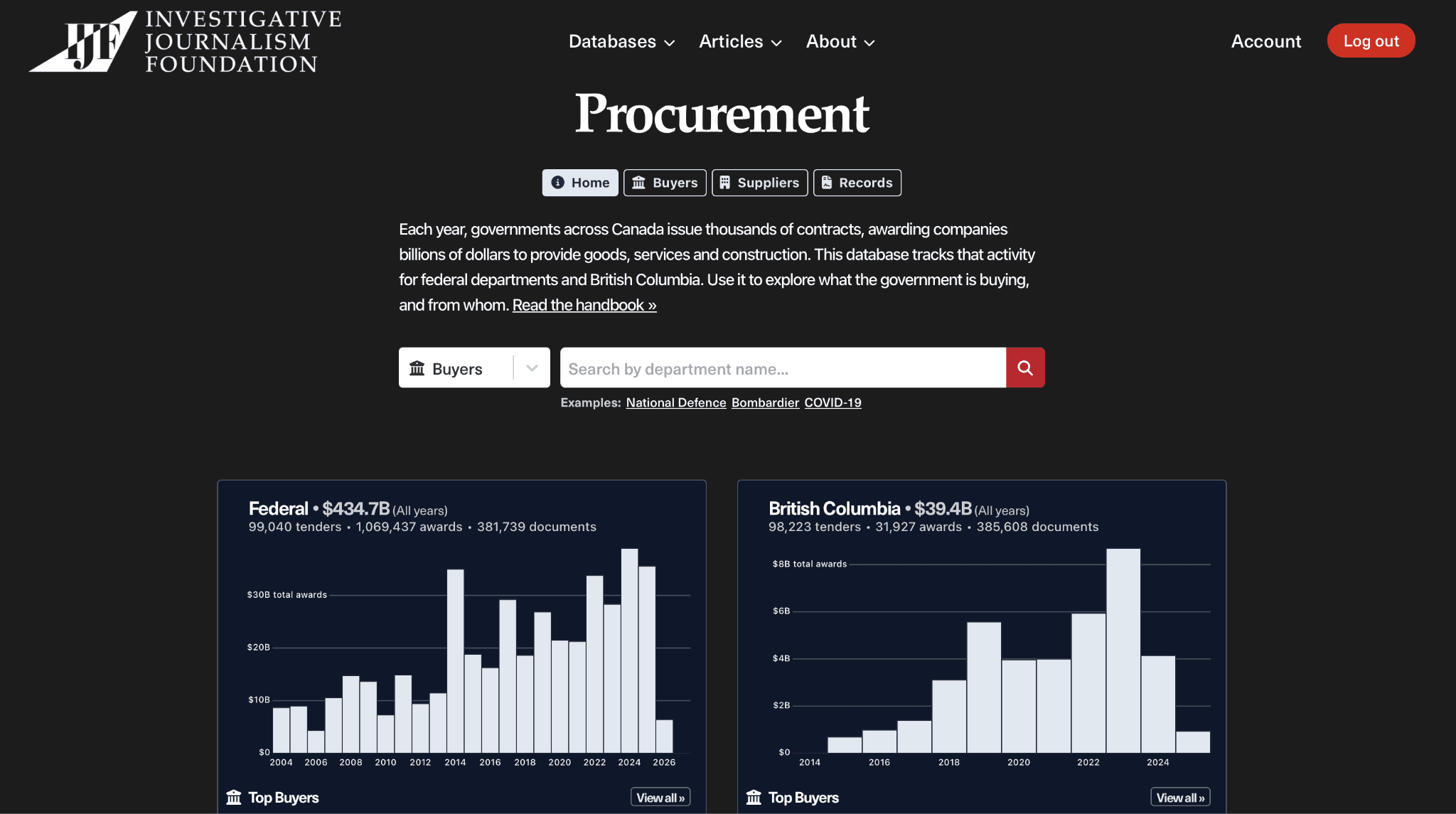
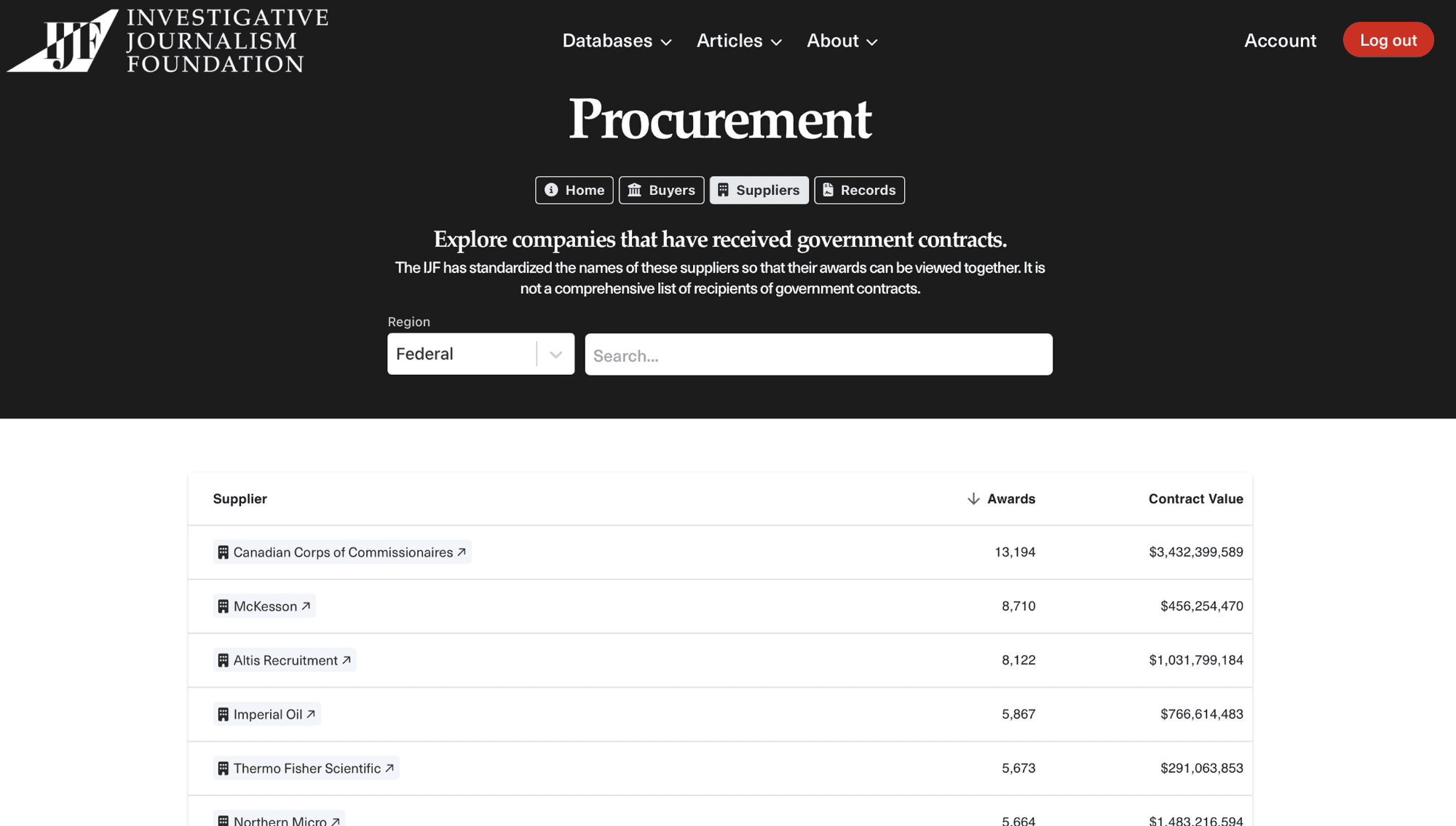
Alternatively, you can toggle between the top four tabs: home, buyers, suppliers and records. When you click on buyers or suppliers, the site will bring you to a list of public bodies acting as buyers or to a list of the biggest suppliers for government contracts. You can then sort by the number of contracts and by the value of the contracts.
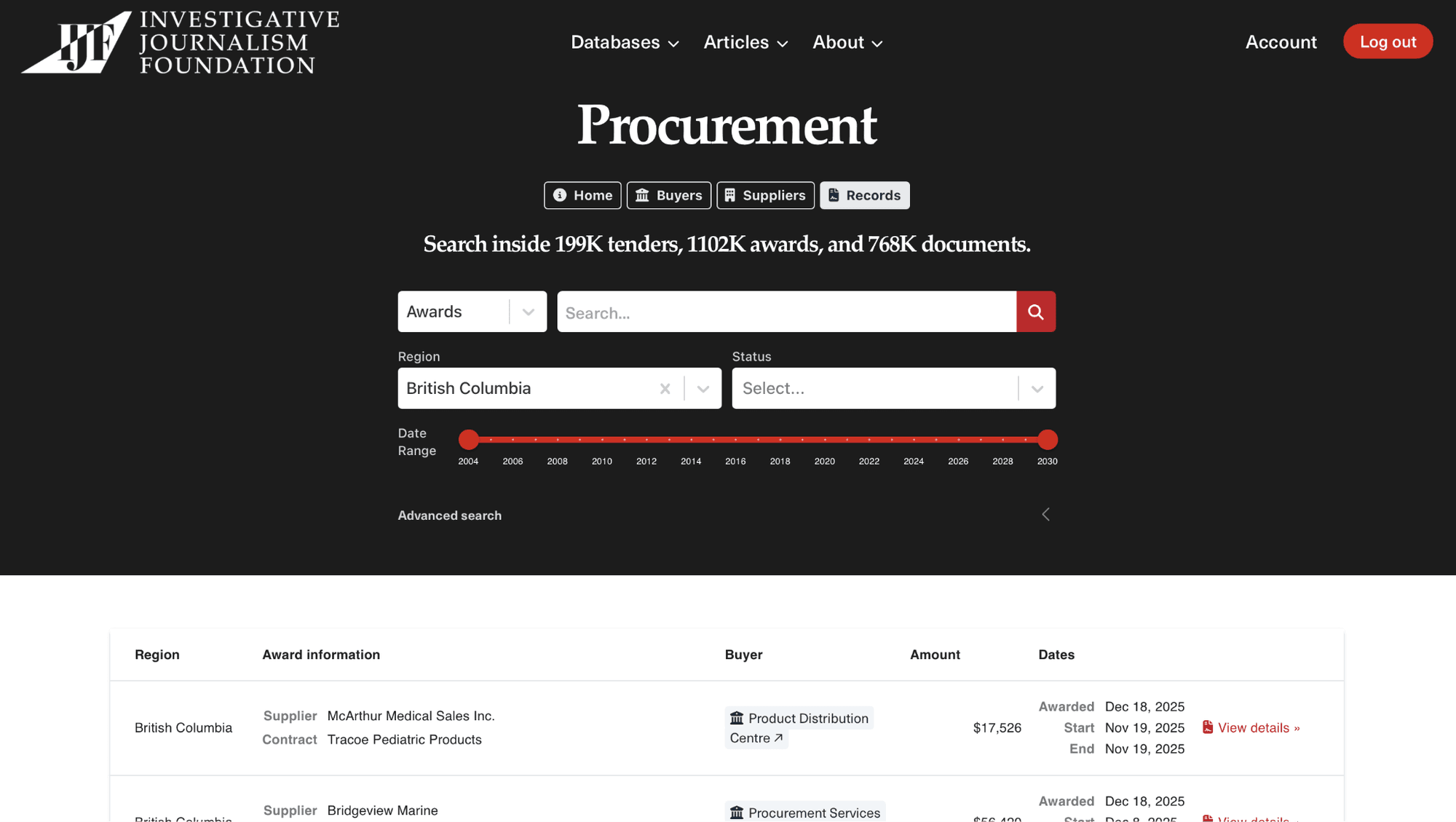
My favourite search function of the website is records. This allows you to start with a broad search of all the records contained in the database and then narrow it down. You can refine your search with the drop-down options including by region (federal, B.C., Vancouver or Victoria), by awards, tenders or documents, and by the status of file (open, closed, awarded, cancelled). You can also adjust the date range, which includes records from 2004 to 2030.
There is also an advanced search option which allows for an even deeper dive into the database. I often use the method drop-down search, which allows you to search the type of contract award, such as competitive or non-competitive, meaning sole-sourced.
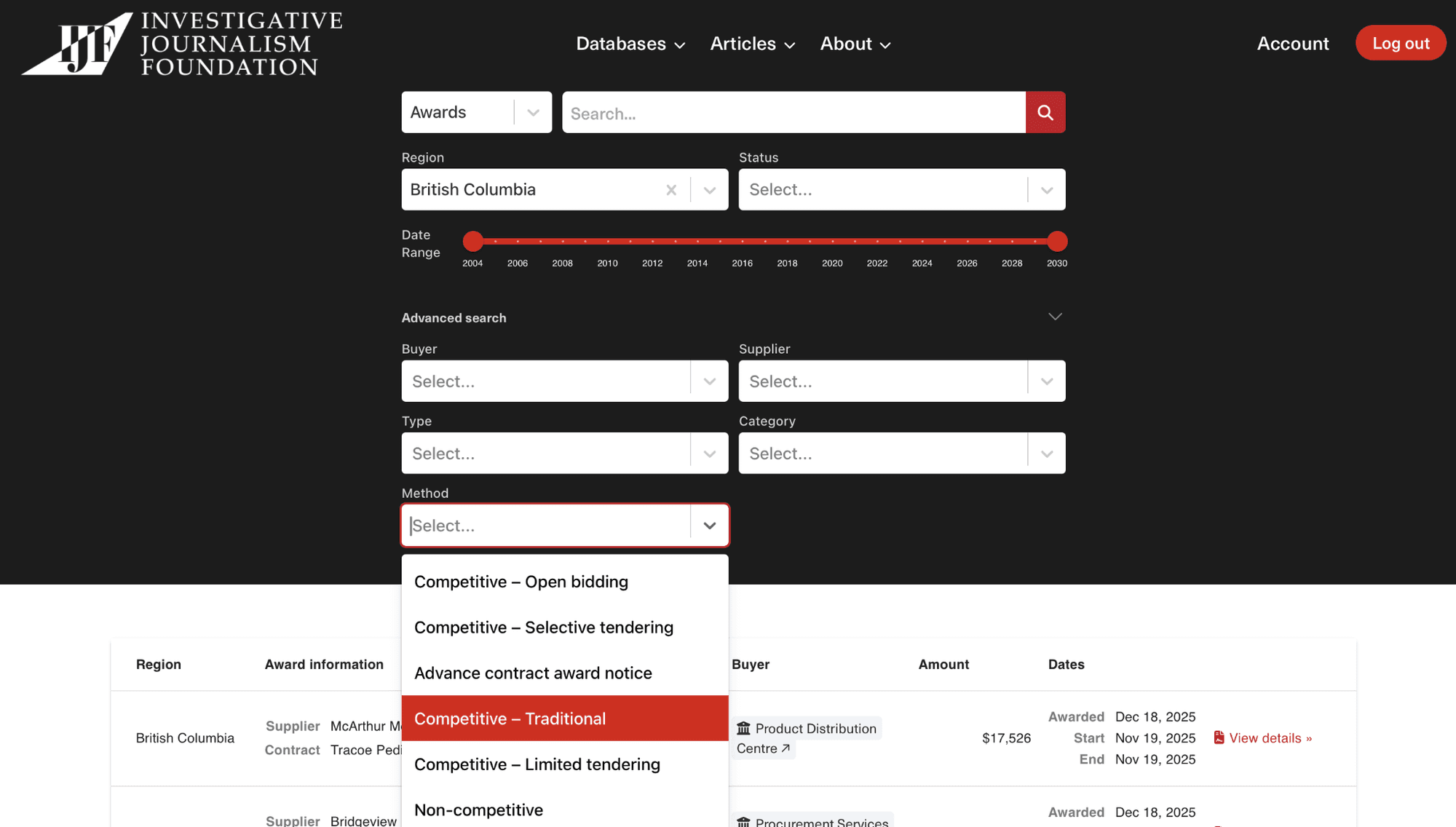
I hope this guide helps you find the excellent, exclusive procurement stories that are hiding in plain sight!
Data for Canadian democracy
The IJF’s databases turn public records into public power. Explore millions of entries on lobbying, donations, contracts, access to information releases and more — and uncover the stories hidden in the data.