
Charities
How to get the most out of our Charities databases
I’ll admit that I came in completely cold when I started reporting on charities a couple of years ago. The system of laws and regulations governing the sector was completely new to me, and I had to get myself up to speed pretty quickly.
I knew there had to be important stories about money and power in the world of charities, just waiting to be told. Canadian charities hold more than $700 billion in tax-shielded assets, money that is often connected to some of the wealthiest people and corporations in the country.
Thankfully, our charities databases were the perfect place to get myself up to speed on the information charities have to provide, and the stories that might be lurking within that data.
The IJF maintains three of these tools.
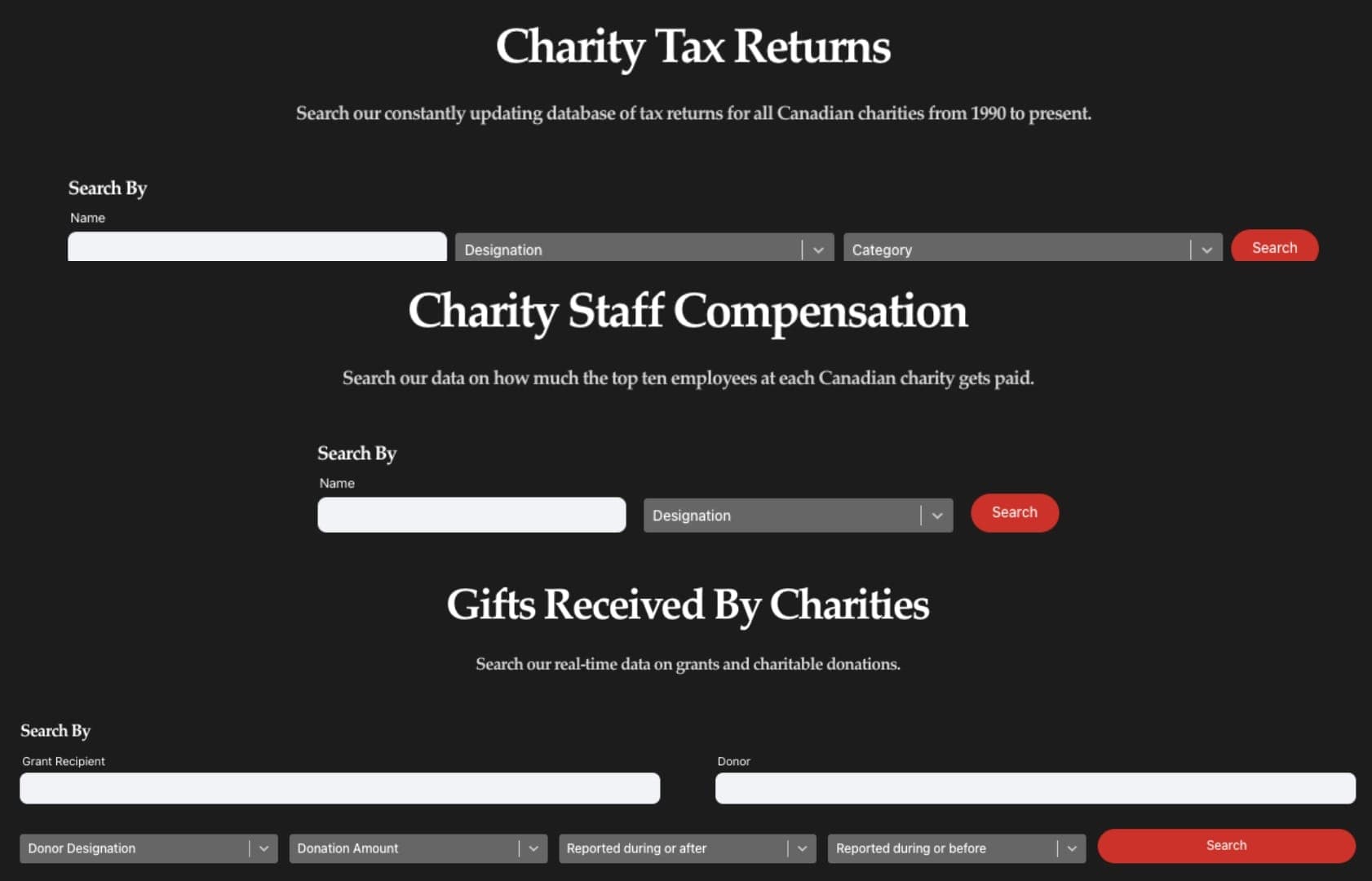
Charity Tax Returns collects information on how charities earn their money, how they spend it and the assets they hold. You can also track how that information changes from year to year.
Charity Staff Compensation shows you how much the top 10 highest-earning employees are making at any given charity.
And finally, Gifts Received By Charities tracks how money moves between charities, by showing when one registered organization gives a donation to another. You can search by the name of the donor charity or the recipient — or both! — and narrow down the results by year and donation value.
To give you an example of how these databases can and have been used to inform our reporting, let’s take a look at the Mastercard Foundation.
This is Canada’s richest charity by a long shot, and we’ve published a few stories about it over the years. It was established by the namesake credit card company, and has had problems in the past with spending enough of its billions on actual charity.
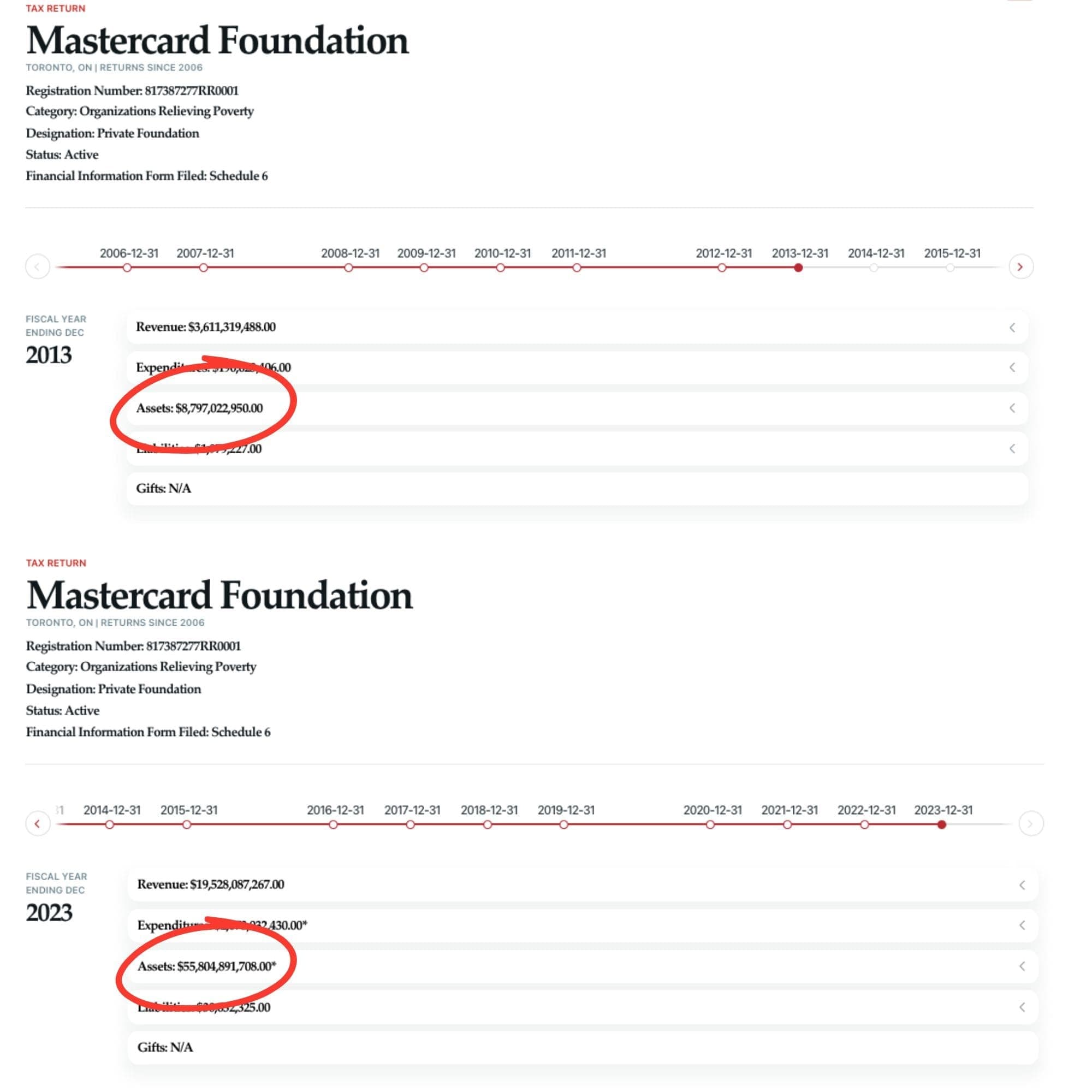
Our tax returns database helps you track how the foundation’s assets more than sextupled from $8.8 billion to $55.8 billion in just one decade.
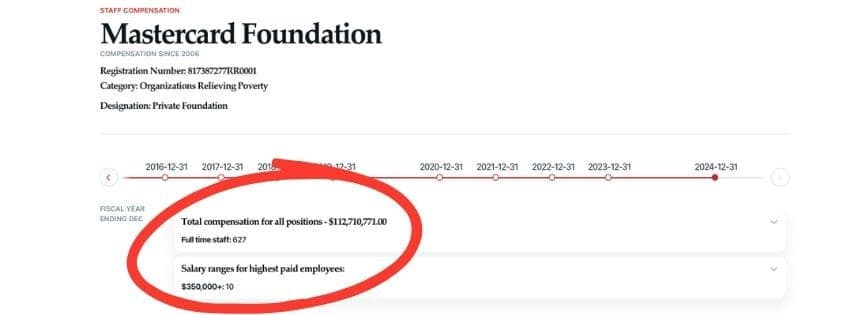
The compensation database helped me confirm that high-level Mastercard Foundation staffers are some of the most well compensated charity workers in Canada. At least 10 of its employees earned more than $350,000 in 2023. That held true in 2024, when the foundation spent nearly $113 million on staff compensation, which you can confirm if you search the database today.
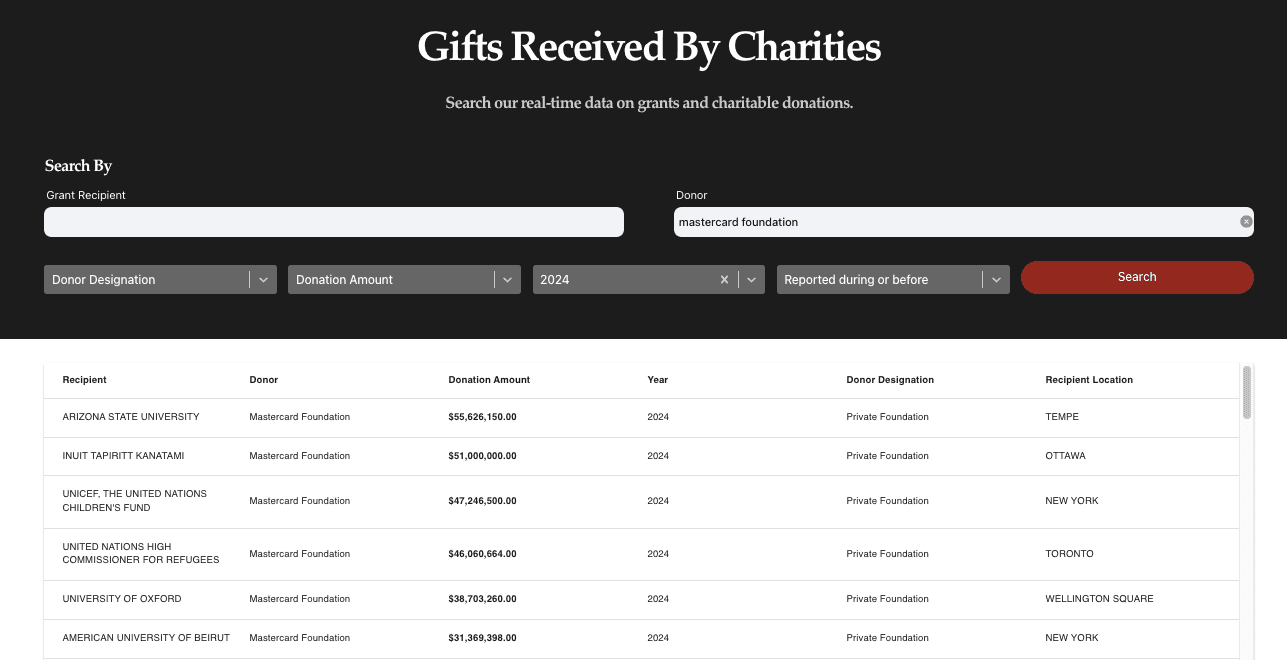
Meanwhile, our database of gifts between charities helped me determine how the Mastercard Foundation has been disbursing its massive resources since it started working to meet its annual legal requirements for charitable spending.
You can see that in 2024, the most recent year for which the foundation’s tax returns are available, the foundation has made donations worth as much as $55.6 million.
These databases have also been crucial for my reporting on a web of revoked charities based in B.C. Just recently, I was able to trace the path of a “gift” of a multi-million dollar loan to Quest University as it made its way between four related charities.
The same database also helped me confirm $925.8 million in gifts between connected charities — something that has raised concerns with the Canada Revenue Agency.
These stories help give Canadians a better idea of how our donation dollars are being used, and the value we’re getting from the tax advantages charities receive. I hope our databases help you find some scoops that shine a light on these important issues!
Data for Canadian democracy
The IJF’s databases turn public records into public power. Explore millions of entries on lobbying, donations, contracts, access to information releases and more — and uncover the stories hidden in the data.