
Open By Default
How to get the most out of our Open By Default database
By Zak Vescera
It was a seven-page document that led to one massive scoop.
Last year, I obtained a series of emails between Canada’s former top spy and senior officials at a giant Canadian oil and gas company.
The implications were huge: TC Energy had pitched the creation of a secret council where intelligence officers could share classified information with some of Canada’s most powerful corporations.
And the spymaster appeared to be supportive — he had even helped the company pressure federal officials to change laws, allowing CSIS to share more confidential information outside the government.
Our story on it, written in collaboration with Matt Simmons at The Narwhal, made a big splash in Canadian environmental and security circles and even picked up a Canadian Association of Journalists award nomination.
It’s one of the many stories I’ve found through Open By Default, a repository of more than 7.4 million pages of completed federal access to information requests the IJF makes freely available to the public.
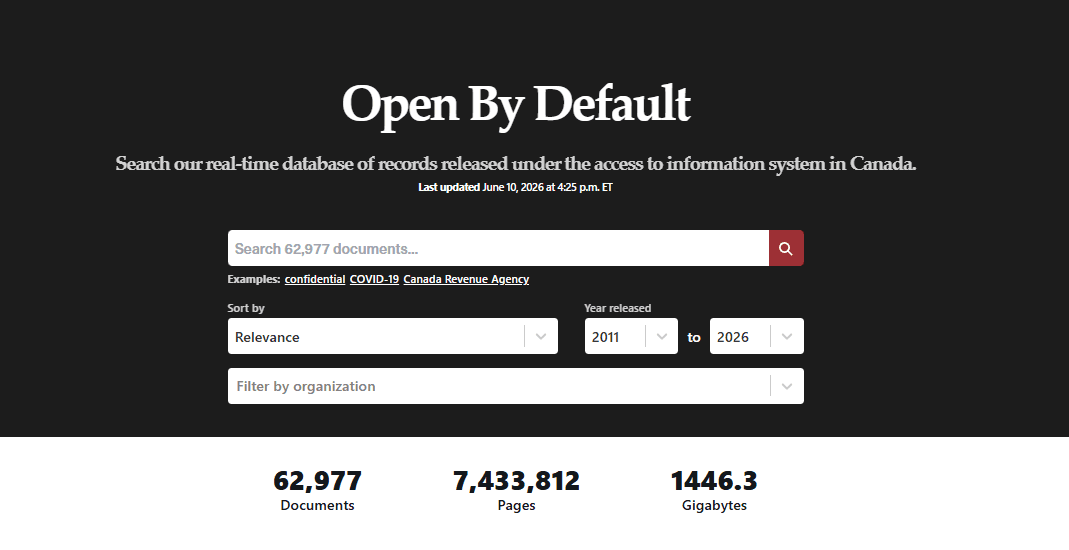
Anyone can request a completed ATIP. But what makes OBD special is that it allows you to search the content of all completed requests through keyword searches.
For a freedom of information nerd, that’s a dream. It makes it infinitely easier to find briefing notes, memos or email chains about whatever you’re looking for.
Often, OBD has helped me find old documents that are relevant to a new story. After Mark Carney inked an investment deal with Qatar, we uncovered a briefing note revealing Canada had been trying to attract money from the Gulf country for years.
When we wanted to take a look at the American software firm Palantir, we were able to dig up a chain of emails revealing the federal government had secretly spent tens of millions of dollars on a contract with the company.
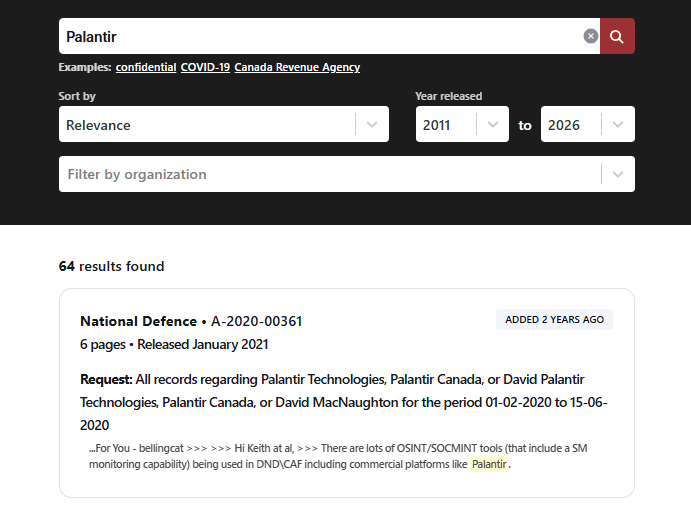
And sometimes, you find things you don’t expect — like an intriguing briefing note about potential foreign interference targeting Indigenous communities in the Arctic. There was also a very interesting document about the Canadian government potentially allowing fishers to hunt for an invasive species of crab that is menacing the West Coast.
Using OBD successfully, to me, is about knowing how to look. This database reminds me of the attic of an old family house or a big yard sale.
There’s plenty of stuff that probably isn’t of interest — it might just be old news. But look in the right places, and there are some gems.
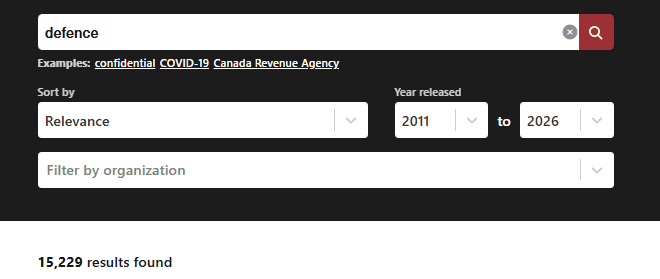
I recommend making sure you’re using very specific keywords. Looking up “defence” and similarly broad terms won’t get you anywhere. But phrases like “CANSOFCOM” — a specific unit of the Canadian military — will get you more pertinent results. The same goes for searching the name of a specific official, business owner or interest group.
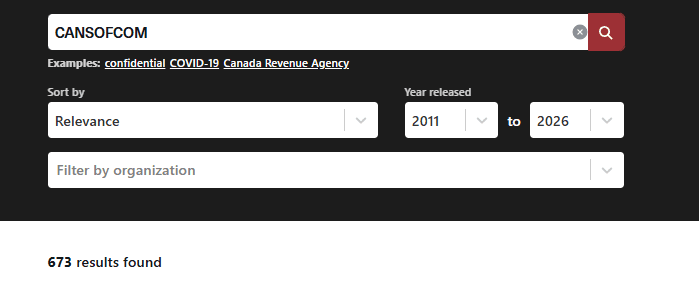
You can further tailor your search for results from specific departments, too. If you’re trying to find information on recent CSIS activity, you probably don’t care too much about documentation from Library and Archives Canada about the intelligence agency’s activity in the 1970s. And if you do care about that, you can tailor your search to that department, too.
You can also search multiple departments at a time, which I find is especially useful if I’m looking at something where jurisdiction on a file overlaps.
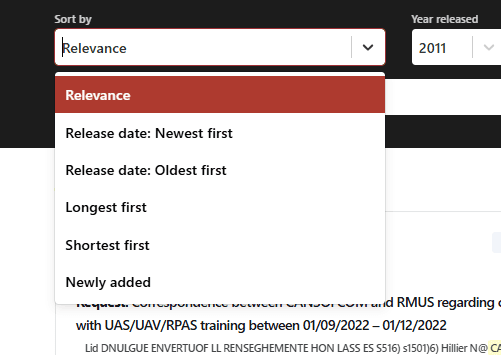
Sometimes, it’s worth looking for older documents to lend context to a recent news event. But generally, fresher documents make for better stories. I recommend sorting documents by “newly added” and focusing on ATIPs released in the past two years.
And of course, the type of document matters, too. Search terms like “Classified” or “Protected A” tend to yield documents that contain sensitive information — which for journalists often means interesting information.
Similarly, you’re probably going to get more out of a secret briefing note prepared for a deputy minister than, say, a media backgrounder.
Like all ATIPs, some of the information will be redacted. But OBD can still save you time by showing you what’s already been released about a given topic.
I’m excited to read what you find. Happy hunting.
Data for Canadian democracy
The IJF’s databases turn public records into public power. Explore millions of entries on lobbying, donations, contracts, access to information releases and more — and uncover the stories hidden in the data.