
Appointments
How to get the most out of our Appointments database
One of the beautiful things about the IJF’s databases is how well they complement and build on each other. The Appointments database is the perfect example — it’s often the most useful when it works in combination with one of our other tools.
From the moment the tech team started developing this new trove of data, the editorial team knew how we wanted to use it.
A few years back, my former colleague Kate Schneider collaborated with the National Post to investigate the political donations of judges appointed by the federal government under Justin Trudeau. It was a blockbuster story that led the Canadian Judicial Council to issue its first ever “expression of concern” about a sitting judge who’d donated to the Liberals.
This was really important work, but it was also tedious. It required manually sifting through years of orders-in-council announcing judicial appointments, and trying to match those names with donations data.
Meanwhile, there are hundreds of other judges across the country who were appointed by 10 different provincial governments. We wanted to track their political donations as well, but the amount of work that would be involved was pretty intimidating.
Luckily, we already had half of the solution, thanks to our Political Donors database. The Appointments database was the missing piece.
Thanks to this new tool, Brett McKay and I were able to identify two sitting judges in Alberta who appear to have donated to the United Conservative Party while serving in this supposedly neutral role. Our findings prompted an investigation by the chief justice of Alberta’s provincial court for possible breaches of ethical standards.
The Appointments database brings together orders-in-council announcing all appointments made by federal and provincial governments, excluding Quebec. It lets you search by keyword, region and date range.
Say, for example, you want to find every judge appointed by the UCP since they came to power. You can enter the keyword “judge,” specify the region as Alberta and limit the search to appointments from 2019 onward, using the red toggle below the search fields.
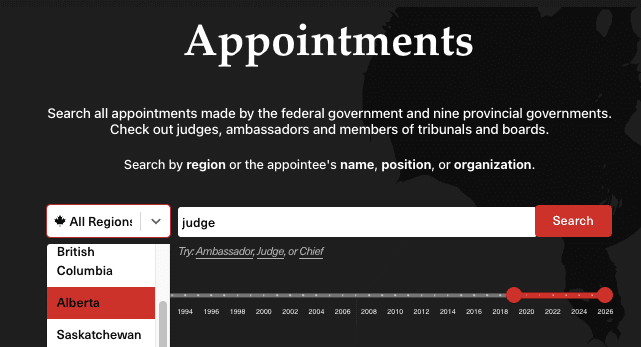
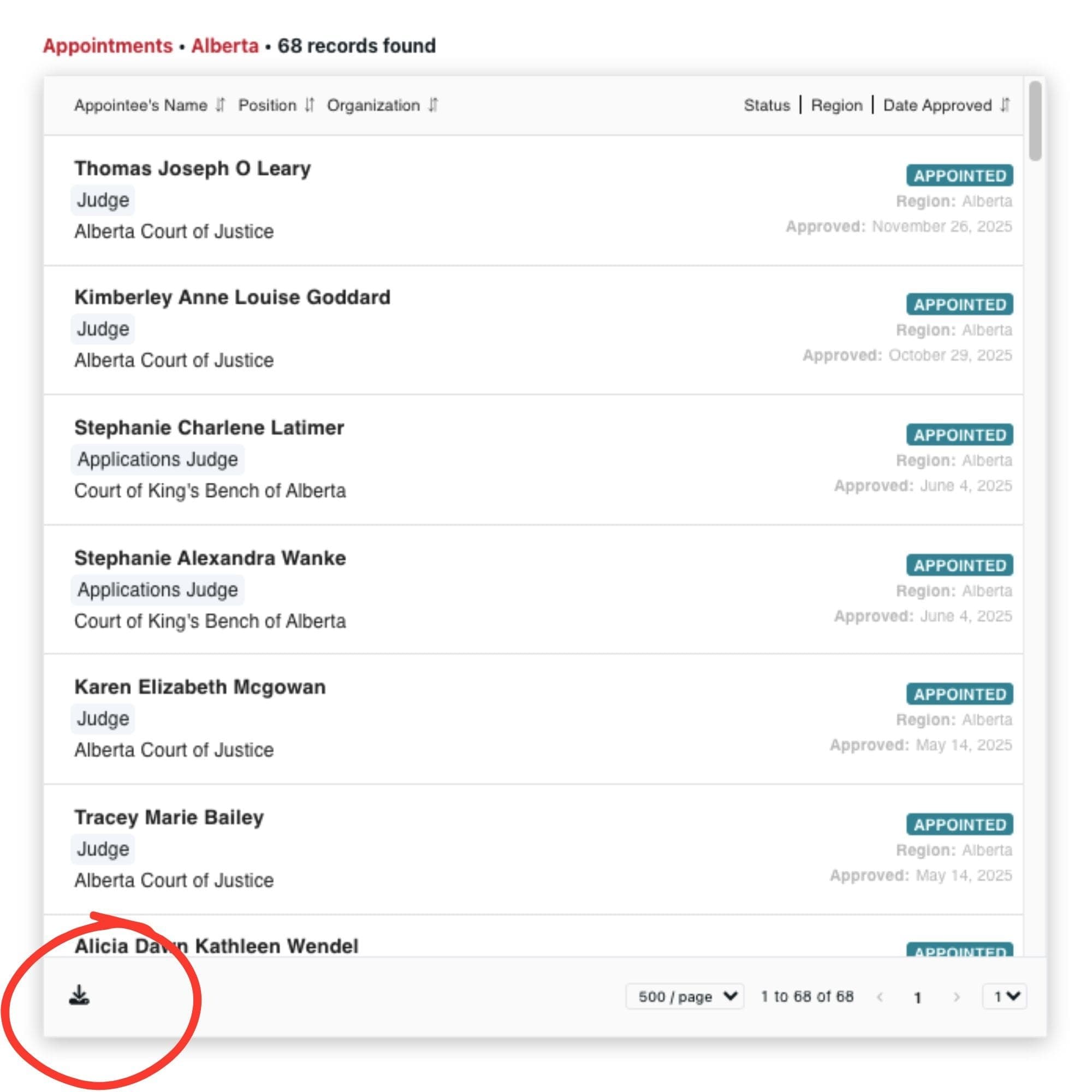
This brings up 68 appointments, which you can download as a spreadsheet in CSV form using the button at the bottom of the results.
Now you can easily compare the names on this list with other data sources. You could try political donations, like we did, but what about checking to see if any of these judges have ever been registered as lobbyists or received any government contracts?
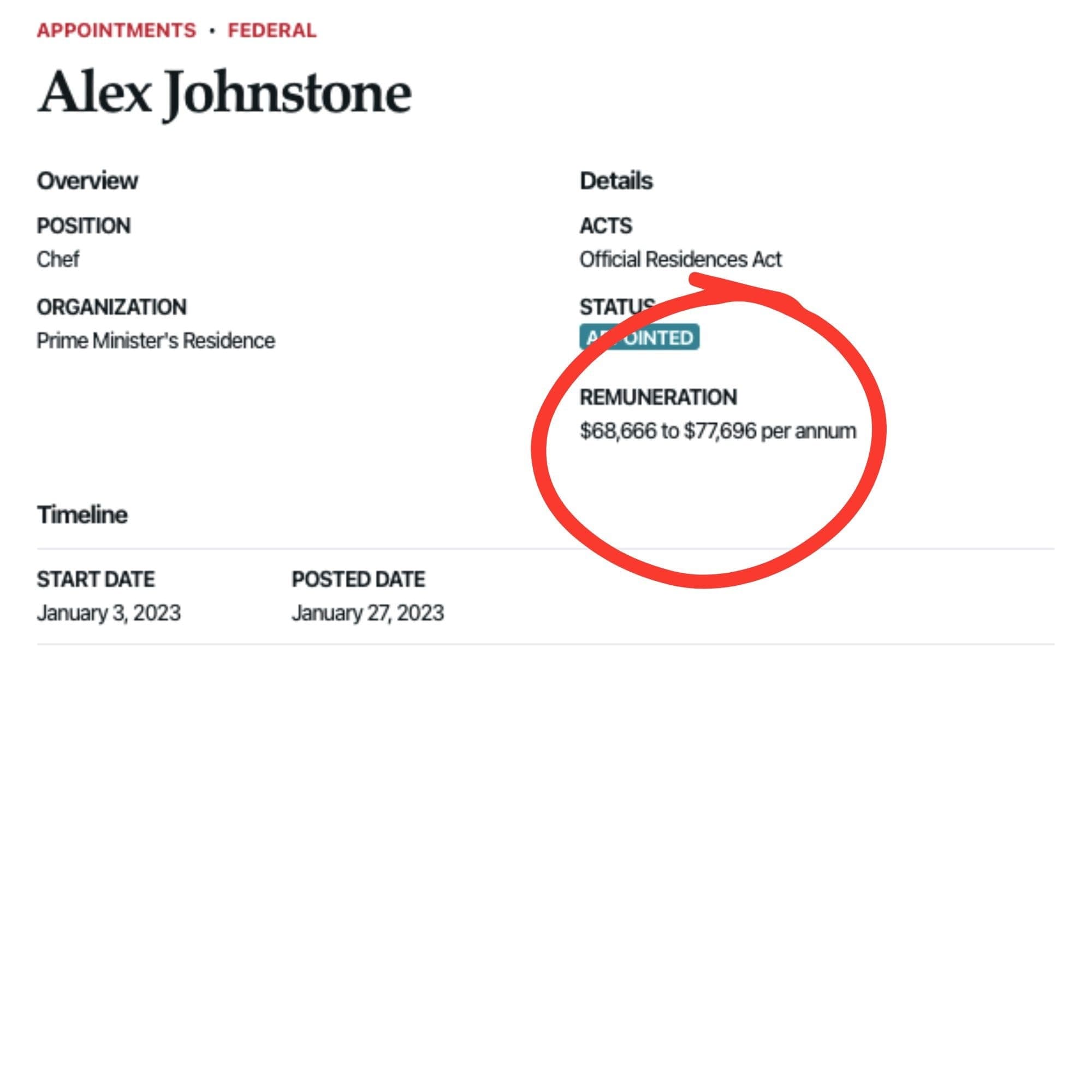
There’s lots of potential for stories within the appointments themselves, as well. Each entry in the database contains the full text of the order-in-council, and some contain a fair amount of detail. You can see, for example, that the prime minister’s chef was appointed in 2023 at a maximum annual salary of $77,696.
In a story we published when the database launched, our former intern Monique Kasonga used this kind of information to compare the salaries of the people who chair provincial gambling agencies.
Appointments is our newest database, so there’s a ton of potential for stories we haven’t had a chance to discover yet.
Consider this your invitation to spend some time poking around in there to see what’s possible. We’d love to hear about the great stories you find!
Data for Canadian democracy
The IJF’s databases turn public records into public power. Explore millions of entries on lobbying, donations, contracts, access to information releases and more — and uncover the stories hidden in the data.